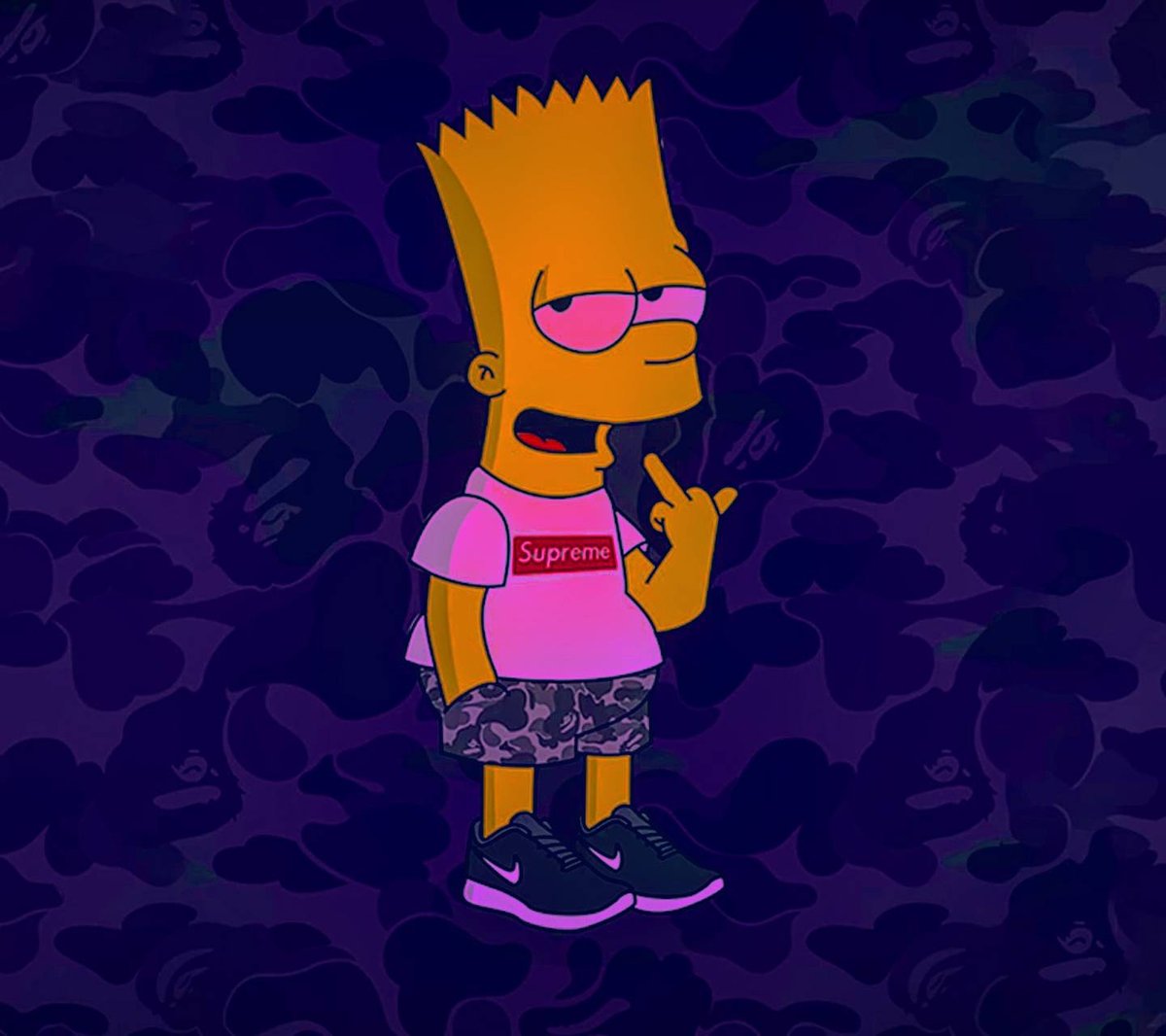
If you came of age in the late 1980s or early 1990s, chances are you knew a Bart Simpson. Maybe you were a Bart Simpson. This spiky-haired, skateboard-riding, catchphrase-spouting rebel wasn't just a cartoon character; he was a cultural phenomenon. His mischievous smirk and "Don't have a cow, man" attitude ignited what became known as "Bartmania," profoundly shaping The Simpsons fandom and leaving an indelible mark on broader public discourse. The very concept of "Black Bart," an antihero embodying rebellion against authority, didn't just sell millions of T-shirts—it transformed television, challenged societal norms, and paved the way for a new era of adult animation.
At a Glance: The Enduring Impact of "Black Bart"
- Pioneering Antihero: Bart Simpson's debut established an unprecedented prime-time cartoon character: a rebellious, underachieving child who openly challenged authority.
- Cultural Flashpoint: His popularity sparked widespread "Bartmania" in 1990, but also significant controversy, with public figures and schools seeing him as an emblem of moral decay.
- Merchandising Giant: Bart spearheaded a massive merchandising empire, with his image plastered on everything from skateboards to banned school T-shirts, generating hundreds of millions in sales.
- Linguistic Legacy: While Bart's direct linguistic influence like "Eat my shorts!" defined 90s slang, his character set the stage for The Simpsons to become a dominant force in shaping modern idioms and introducing new words into dictionaries.
- Paved the Way for Adult Animation: Bart's boundary-pushing antics helped transform animation from a kids-only medium into a prime-time slot for adult entertainment, influencing shows like South Park and Family Guy.
- Shifting Focus: While Bart was the initial superstar, the show's narrative eventually shifted its center of gravity to Homer, allowing for more complex story arcs and consequences.
The Genesis of an Iconoclast: Who Was "Black Bart"?
Long before Homer's "D'oh!" became a dictionary entry or Lisa's sax solos signaled intellectual angst, there was Bart. He was the original disruptor, the character who first catapulted The Simpsons into the public consciousness as something truly different. Creator Matt Groening designed Bart to embody the mischievous energy and classroom frustrations he himself felt as a child, ensuring Bart was the last Simpson family member he created for The Tracey Ullman Show in 1987. His name, "Bart," was chosen to avoid an egotistical nod to Groening's own name, and his distinctive jagged hair, a saw-tooth silhouette, came to life when Klasky Csupo animated the family in color.
Voice actor Nancy Cartwright was drawn to the description: "devious, underachieving, school-hating, irreverent, clever." Groening also described him as simply "bored," a sentiment that resonated deeply with a generation of kids. Bart's debut catchphrase, "I’m Bart Simpson. Who the hell are you?", in the 1987 Christmas special "Simpsons Roasting on an Open Fire," immediately signaled his insouciant character. This was no polite cartoon kid. This was "Black Bart"—a term that, while not officially used by the show, captured the antiheroic, rebellious spirit he personified. He was the kid who challenged the system, a force unprecedented in a prime-time cartoon family sitcom. Within weeks of The Simpsons' 1990 premiere, "Bartmania" was a national obsession.
Bart's Provocative Role: Sparking Cultural Debate and Outrage
Bart's rapid ascent to cultural icon status wasn't without its detractors. His "antihero" persona and seemingly disrespectful demeanor quickly positioned him as an emblem of moral decay in the eyes of many. Public outrage was swift and vocal. High-profile figures like First Lady Barbara Bush and conservative commentator William Bennett decried Bart's influence, suggesting he represented everything wrong with modern youth.
This controversy reached its peak with the infamous "Underachiever and proud of it, man" T-shirt. In April 1990, an officially licensed shirt featuring Bart with this slogan sparked widespread bans in schools across the country, most notably by Principal Bill Krumnow in Ohio, who claimed it contradicted educational values. Even JCPenney stopped stocking the shirt. Groening, however, found humor in the bans, viewing the slogan not as an endorsement of failure, but as Bart reclaiming a dismissive label in protest of a flawed education system. He relished the fact that Bart managed to offend a portion of the audience while simultaneously captivating millions of others. This tension between rebellion and establishment cemented Bart's unique impact on Simpsons fandom and public discourse.
The Merchandising Juggernaut: How Bart Fueled an Empire
Before The Simpsons, many cartoons were designed specifically to sell toys. Bart Simpson flipped that script. He became a cultural phenomenon first, and then a merchandising bonanza naturally followed. "Bartmania" wasn't just about TV ratings; it was about product saturation. Bart appeared on magazine covers, MTV, and even endorsed Butterfingers. His image was ubiquitous.
The sheer volume of Simpsons merchandise, largely driven by Bart's early popularity, was staggering. The franchise, a billion-dollar empire, had already generated over $750 million in merchandise sales by 2008. Groening himself enjoyed the array of licensed products and even collected off-brand Bart shirts from street vendors, a testament to the character's organic, grassroots appeal that transcended official branding. Bart's face, with his mischievous grin and spiky hair, became synonymous with a generation's cool, rebellious spirit, fueling a commercial machine that would sustain The Simpsons for decades. To truly appreciate the scale of this phenomenon, you might want to learn about Simpsons Black Bart and the broader context of his immediate cultural explosion.
Paving the Way: Bart's Legacy in Adult Animation
Bart's early provocations and the show's satirical edge weren't just a flash in the pan; they fundamentally altered the landscape of television. Before The Simpsons, animation was largely confined to children's programming. The show, by airing on Fox, transformed animation into prime-time adult entertainment. It blended sharp satire, complex characters, and adult themes in a way that had never been seen before on network television.
This pioneering effort created fertile ground for an entirely new genre. Creator Seth MacFarlane openly credits The Simpsons with reinventing prime-time animation, paving the way for his own successful series like Family Guy, as well as other groundbreaking shows such as South Park and King of the Hill. Bart's initial character, pushing boundaries with his "Eat my shorts!" attitude, was instrumental in demonstrating that animation could be more than just slapstick—it could be a vehicle for biting social commentary and nuanced storytelling. The show also influenced production practices, notably by outsourcing animation to lower costs, a model now standard in the industry, proving its impact stretched far beyond character alone.
The Shifting Center of Gravity: From Bart's Antics to Homer's Humanity
While Bart was the undeniable star of the early seasons, the show's creators eventually recognized a need for evolution. After seasons one and two, the center of gravity gradually shifted from Bart to his bumbling, lovable father, Homer. This wasn't a rejection of Bart, but a creative decision driven by the desire for fresh storytelling. Creators felt they had exhausted Bart's primary story arcs—his rebellious antics, his struggles with school, his rivalry with Sideshow Bob.
Homer, with his adult responsibilities, his job at the nuclear plant, and his often-catastrophic decision-making, offered "more consequences" and a broader range of comedic and dramatic possibilities. This shift allowed The Simpsons to move beyond its initial focus on a rebellious kid and delve deeper into family dynamics, social satire, and even moments of surprising emotion. Evidence of this cultural shift could even be seen in carnival prizes, which eventually transitioned from featuring Bart to newer characters like those from Family Guy. By 1994, The Simpsons was evolving beyond its family sitcom roots, embracing more cartoon zaniness and exploring new avenues for humor and social commentary, ultimately broadening its reach and impact.
Bart's Lingering Legacy: Beyond "Bartmania"
Even as the spotlight moved, Bart's influence never truly faded. His iconic phrases, like "Eat my shorts!" and "Don't have a cow, man," defined 1990s slang, echoing in playgrounds and pop culture for years. While his direct linguistic impact might have been overshadowed by other characters later on, Bart's early success created the framework for The Simpsons to become an unparalleled source of new idioms and expressions.
Linguist Mark Liberman notes that the show's influence surpasses Shakespeare and the Bible as a source of modern idioms. Homer's "D'oh!" entered the Oxford English Dictionary in 2001, and neologisms like "cromulent" (legitimate) and "embiggen" (to enlarge) from "Lisa the Iconoclast" have found their way into dictionaries and even scientific papers (Nature). The show popularized "Meh," which was added to the Collins English Dictionary in 2008. Bart's early, seemingly innocent antics, though later appearing tame as culture became "more coarse," still laid the groundwork for this linguistic and memetic explosion, showcasing the power of animated satire. Scenes like "Steamed Hams" and phrases like "I, for one, welcome our new insect overlords" continue to fuel online memes and discussions, keeping the show—and its early rebellious spirit—relevant in the cultural zeitgeist.
Bart's impact also contributed to the show's ability to tackle complex societal issues. The Simpsons uses humor to critique politics, religion, education, and corporate greed, often with a liberal bent. It has addressed environmental issues, advanced LGBTQ+ representation, and sparked debates on racial representation. The show's uncanny "predictions" of real-world events, from Disney acquiring Fox to Lisa becoming president after Donald Trump, further fuel online discussions and keep The Simpsons in the cultural conversation, cementing its status as more than just a cartoon—it's a vibrant, ever-evolving cultural touchstone with dedicated fan communities across platforms like Reddit and X.
Navigating the Past, Present, and Future of a Cultural Touchstone
Bart Simpson's initial rebellious spark was more than just a passing trend; it was a foundational tremor that reshaped the entertainment landscape. "Black Bart," the mischievous antihero, not only captured the spirit of a generation but also proved that animated characters could be complex, controversial, and profoundly influential. He pushed boundaries, ignited debates, and—perhaps most importantly—opened the door for The Simpsons to become the enduring cultural phenomenon it is today.
From its pioneering role in adult animation to its unparalleled linguistic legacy and its vibrant, dedicated fan communities, The Simpsons continues to influence and entertain. The rebellious spirit of Bart Simpson, who dared to ask "Who the hell are you?", remains a crucial thread in this rich tapestry, reminding us that sometimes, the biggest impacts come from the smallest, spikiest characters. The journey of Bart, from a banned T-shirt slogan to a global icon, stands as a testament to the show's unique ability to both mirror and shape the world around us.