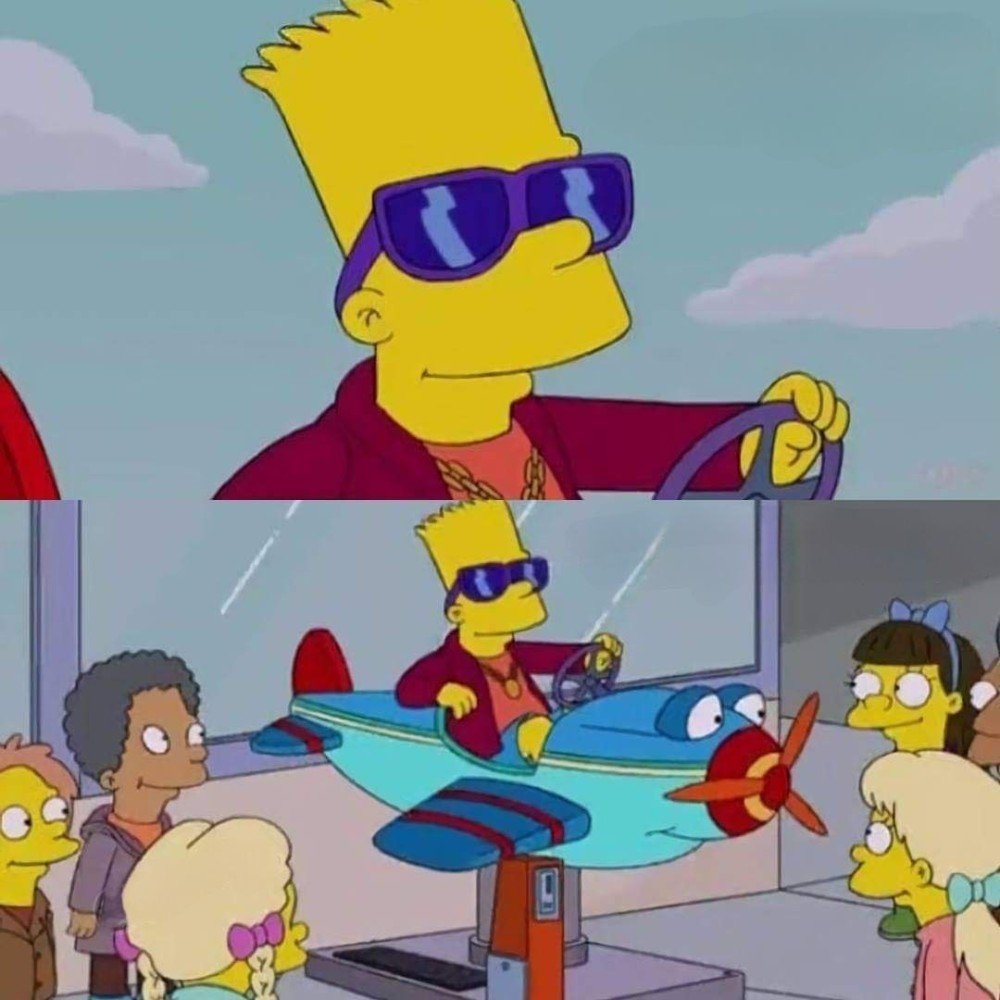
When you think of Bart Simpson, you likely picture a spiky-haired, yellow-skinned rebel shouting "Eat my shorts!" But somewhere along the character's decades-long journey, a fascinating, unauthorized alter-ego emerged from the cultural underground: the "Black Bart Simpson." This phenomenon, often encompassing mutated, badly drawn, or ethnically diverse depictions, has evolved from illicit street merchandise into a celebrated meme, reflecting a unique intersection of fandom, subversion, and digital culture. Unpacking the Origins and Evolution of 'Black Bart Simpson' as a Meme reveals a compelling story about how art, even when unauthorized, can capture the zeitgeist and carve out its own distinct legacy.
At a Glance: The Journey of Black Bart Simpson
- Born from "Bartmania": Black Bart Simpson emerged from the explosion of unauthorized "Bootleg Bart" merchandise in the early 1990s, capitalizing on The Simpsons' immense popularity.
- Beyond Yellow Skin: These bootlegs often depicted Bart with different ethnicities, including Black, alongside other mutations and misinterpretations.
- Digital Resurgence: A single-topic blog by "Leo," starting in 2003, ignited online interest, creating a dedicated community for collecting and sharing Bootleg Bart imagery.
- Mainstream Acknowledgment: From The Simpsons' own comics to shows like Portlandia and art exhibitions, the cultural significance of Bootleg Bart has been recognized.
- "Eat Pant" & Memetic Virality: The iconic "Eat Pant" meme exemplifies how bootleg imperfections, like misspellings on a cake, can achieve widespread internet fame.
- Cultural Significance: Black Bart Simpson and the broader Bootleg Bart phenomenon represent a blend of nostalgia, anti-consumerism, outsider art, and the fluid nature of pop culture identity.
From Yellow to Unexpected Hues: The Original Bootleg Bart Phenomenon
To truly understand the "Black Bart Simpson" meme, we must first rewind to the late 1980s and early 1990s, a period affectionately known as "Bartmania." When The Simpsons debuted in 1987 (first as shorts on The Tracey Ullman Show), Bart Simpson quickly became a cultural icon. His rebellious attitude, memorable catchphrases, and distinctive look resonated with audiences, particularly teenagers and young adults, launching him into an unprecedented level of pop culture ubiquity.
This explosion of popularity, peaking around 1997 for the show itself, created a ravenous demand for merchandise. While official products flooded the market, the sheer scale of Bart's fame also opened the floodgates for something else: unauthorized, black market counterfeit items. These "Bootleg Bart" creations weren't just knock-offs; they were often crude, strangely drawn, or creatively reimagined versions of the character, existing in a fascinating parallel universe to the official brand.
An Entertainment Weekly article from that vibrant period once estimated that over $200 million worth of Bootleg Bart merchandise had been sold. This wasn't small potatoes; it was a massive, decentralized industry driven by opportunism and fan demand. These bootlegs took many forms, primarily T-shirts, but also posters, keychains, and more. They featured Bart in countless bizarre scenarios, often with different slogans than his official ones. You might find "Teenage Mutant Ninja Bart" or "RastaBart," reflecting cultural trends and a willingness to mash up popular characters. Crucially, these unauthorized items often depicted Bart with altered physical characteristics, sometimes mutating him, sometimes badly drawing him, and often, critically, portraying him with a different ethnicity. This is where the concept of "Black Bart Simpson" finds its earliest, tangible roots – born from the fertile, chaotic ground of early '90s bootleg culture.
Interestingly, The Simpsons' creator, Matt Groening, generally held a surprisingly liberal view on much of this bootleg merchandise. He seemed to appreciate the grassroots fandom and creativity, perhaps seeing it as a testament to the character's widespread appeal. However, he did draw a line. He reportedly made an exception for "Nazi Bart" shirts, which depicted Bart in a Nazi uniform or as a white power skinhead, understanding that some expressions crossed a boundary from quirky fan art into genuinely offensive and harmful territory. This distinction highlights that even within the wild west of bootleg culture, there were unspoken rules and perceived limits.
The Digital Renaissance of Bootleg Bart
For years, Bootleg Bart merchandise remained primarily a physical phenomenon, traded at swap meets, flea markets, and independent shops. Collectors cherished these oddities, but their cultural footprint was largely localized and niche. That began to change dramatically with the advent of the internet and the rise of social media.
The online interest in Bootleg Bart truly ignited around 2003 when a dedicated individual named Leo began collecting these shirts. What started as a personal passion soon blossomed into a public archive. Leo initially launched a Facebook page dedicated to sharing images of these peculiar Bart variations. This single-topic blog, driven by his meticulous collection and genuine enthusiasm, quickly became the central hub for a growing community. As the years progressed, Leo expanded his efforts to other platforms, eventually establishing a dedicated website to house the ever-growing collection of strange and wonderful Barts.
The numbers speak volumes about the phenomenon's online traction. As of July 29th, 2015, the original Facebook page boasted 12,000 followers, while its Instagram counterpart had surged to 38,800 followers. That same year, the official Instagram account had already amassed 648 posts, showcasing a rich tapestry of bootleg finds. Even more telling, nearly 10,000 posts across Instagram were tagged with #bootlegbart, demonstrating a widespread, organic embrace by users beyond Leo's direct influence. The term also found a significant home on Tumblr, where it became a popular tag for modern fan art that continued the tradition of reimagining Bart in unconventional ways.
This digital resurgence wasn't just about archiving old merchandise; it was about celebrating an aesthetic. The online community found beauty in the flaws, humor in the misinterpretations, and a shared nostalgia for a time when pop culture was a little wilder, less polished, and more accessible to unauthorized reinterpretation. This new wave of appreciation is crucial to understanding the path toward Black Bart Simpson becoming a distinct and recognizable meme, as digital platforms allowed these specific ethnic renditions to circulate more broadly and gain specific traction. For those interested in Exploring Black Bart Simpson in more detail, the online archives of Bootleg Bart are an invaluable starting point.
When Bootlegs Go Mainstream: Pop Culture's Nod
What begins as an underground movement or a niche collecting hobby often, if it has enough cultural resonance, eventually bubbles up into mainstream consciousness. The Bootleg Bart phenomenon is a perfect example of this trajectory. From comic book pages to television shows and even art galleries, official culture has increasingly acknowledged, and even embraced, its unauthorized counterpart.
One of the earliest, and most delightful, acknowledgments came from The Simpsons themselves. In a 2009 "Treehouse of Horror" comic – a series known for its irreverent takes and meta-humor – Bootleg Bart imagery was directly referenced. This wasn't just a nod; it was a wink, a tacit admission that the creators were aware of, and perhaps even amused by, the vast world of unauthorized merchandise their character had spawned. It lent a peculiar form of legitimacy to the illegitimate.
The concept was further amplified in February 2015 when the IFC show Portlandia, known for its satirical portrayal of quirky subcultures, featured a storyline centered around a character creating a "Bart Ska-Mpson" t-shirt. The episode perfectly captured the ironic appreciation for off-brand merchandise, highlighting the nuanced appeal of these bizarre creations. To top it off, the segment included a cameo by none other than The Simpsons' creator, Matt Groening himself, signifying an almost full-circle journey from initial unauthorized creation to creator-acknowledged pop culture trope.
Perhaps the most significant mainstream validation came shortly after, from July 25th-26th, 2015, when Be Street magazine sponsored a "Bootleg Bart" art show in Los Angeles. This wasn't just a casual gathering; it was a curated exhibition featuring contemporary artists who drew inspiration from the bootleg aesthetic. The organizers received over 1000 submissions, a testament to the deep well of creative energy this phenomenon had tapped into. The selection process alone highlighted the artistic merit being found in these once-dismissed items. The buzz around the show grew even louder with rumors that Matt Groening, a rumored collector of Bootleg Bart merchandise, visited the exhibition. This visit, whether confirmed or merely whispered, underscored the idea that what was once considered "bad art" or "fake merchandise" had transcended its origins to become a legitimate subject of artistic and cultural appreciation.
"Eat Pant": A Meme Born from Imperfection
While "Bootleg Bart" encompasses a vast array of unauthorized imagery, few specific iterations have achieved the memetic fame of "Eat Pant." This phrase, a wonderfully absurd misspelling of Bart Simpson's iconic catchphrase, "Eat my shorts," perfectly encapsulates the charm and humor of the bootleg aesthetic, becoming a symbol of unintentional comedy and flawed execution.
The "Eat Pant" phenomenon can be precisely traced to two separate, yet equally significant, cake incidents. The first widely shared instance occurred on July 24th, 2016, when a Twitter user, @gaysexhaver420, posted an image of a cake featuring a crudely drawn Bart Simpson and the misspelled phrase. This post quickly garnered attention, receiving over 110 retweets and introducing "Eat Pant" to a broader audience.
Just a few months later, on September 15th, 2016, a second cake emerged, this time posted to Reddit's surreal and often bizarre /r/Ooer subreddit. This cake also featured a poorly rendered Bart and the now-familiar "Eat Pant" phrase. This second appearance gained even greater traction, racking up over 350 points on the esoteric subreddit.
What followed was a cascade of online sharing. Both cakes, but particularly the second one with its uniquely distorted Bart, appeared repeatedly across Reddit. The image associated with the second cake became almost synonymous with "Eat Pant," cementing its visual identity. It garnered over 13,000 points on /r/crappyoffbrands (a subreddit dedicated to hilarious knock-offs) and an astounding 19,000 points on /r/therewasanattempt (a subreddit showcasing efforts that fell short). The rapid spread and high engagement demonstrated how quickly a simple, relatable imperfection—a misspelled cake from an untrained baker—could morph into a viral sensation, riding on the coattails of the pre-existing Bootleg Bart aesthetic. "Eat Pant" became more than just a phrase; it became a shorthand for the endearing awkwardness and accidental brilliance of bootleg culture, often featuring a generic, non-yellow, or even specifically "Black Bart Simpson"-esque drawing style.
Deconstructing the Appeal: Why Black Bart Simpson Resonates
The enduring popularity of Black Bart Simpson, both as a historical artifact and a modern meme, is a complex tapestry woven from several cultural threads. It's more than just a funny picture; it’s a reflection of how we engage with pop culture, intellectual property, and even identity.
Nostalgia for Early Internet/Pre-Internet Culture: For many, the imagery of a badly drawn or ethnically diverse Bart evokes a powerful sense of nostalgia. It harks back to an era before brand guidelines were rigidly enforced online, when information (and misinformation) spread more organically. It reminds us of a time when pop culture was absorbed not just through official channels, but also through the informal, often chaotic, lens of street vendors and independent creators. This pre-digital "wild west" charm resonates deeply in an increasingly curated digital landscape.
Subversion and Anti-Commercialism: Bootleg Bart, by its very nature, is an act of subversion. It's a defiant middle finger to corporate ownership and mass-produced conformity. In a world saturated with carefully managed brands, the bootleg offers an unfiltered, raw alternative. The Black Bart Simpson variations, in particular, push this further by altering the character's core identity, challenging the original, singular vision. This anti-establishment sentiment, however subtle, appeals to those who enjoy seeing established norms playfully disrupted.
The Charm of Imperfection and "Outsider Art": There's an undeniable, almost accidental, artistic merit to many bootleg designs. The bad drawings, the odd color choices, the strange proportions – these aren't errors to be corrected, but features to be celebrated. They often possess a naive sincerity or an unintentional surrealism that official art, bound by strict corporate guidelines, rarely achieves. This resonates with the appreciation for "outsider art," where untrained artists create compelling work outside the mainstream art world. Black Bart Simpson, in many renditions, embodies this perfectly, with its often simplified or dramatically altered features creating a new, compelling aesthetic.
Representation and Identity in Unauthorized Art: The depiction of Bart Simpson as a different ethnicity, particularly as Black Bart Simpson, introduces a fascinating layer of cultural commentary. In an era where discussions about representation in media are paramount, these unauthorized versions accidentally, or perhaps intentionally, provided a space for reimagining iconic characters. For some, seeing a "Black Bart" might have been a simple artistic choice, but for others, it could have offered a moment of unexpected connection or a subtle critique of the predominantly white characters in mainstream animation. These unofficial adaptations allowed for a fluid, non-sanctioned exploration of identity, further cementing their unique cultural footprint.
The Cultural Feedback Loop: From Bootleg to Art to Meme: The journey of Black Bart Simpson from black market T-shirt to internet meme demonstrates a powerful cultural feedback loop. What started as capitalizing on a trend evolved into its own distinct subculture, then gained academic and artistic recognition, and finally became virally shareable online. Each stage reinforced its significance, turning what was once dismissed as "fake" into something genuinely authentic and culturally resonant.
Beyond the Joke: What Black Bart Simpson Tells Us About Culture
The phenomenon of Black Bart Simpson, and the wider Bootleg Bart universe, offers more than just a chuckle; it provides significant insights into contemporary culture, intellectual property, and the nature of fandom itself.
The Fluidity of Intellectual Property in the Digital Age: The saga of Bootleg Bart vividly illustrates how porous intellectual property boundaries can become, especially in the era of digital replication. While creators and corporations strive to protect their brands, the speed and scale of fan engagement and appropriation online often outpace legal frameworks. Black Bart Simpson exemplifies how a character can escape the confines of its original context and live a thousand different lives in the public imagination, often far from the creator's intent. This doesn't necessarily devalue the original; rather, it speaks to its immense cultural power that it can inspire such diverse reinterpretations.
Fandom's Power to Reclaim and Reinterpret: At its core, Bootleg Bart is a testament to the power of fandom. It showcases how dedicated fans (and even opportunistic entrepreneurs) don't just consume culture; they actively reshape it, bend it, and make it their own. Whether through collecting rare physical items or digitally creating new memes, fans demonstrate an ownership that goes beyond mere viewership. When fans create a "Black Bart Simpson," they are, in a sense, reclaiming the character, infusing it with new meanings and identities that may or may not have been present in the original. This active reinterpretation often breathes new life into characters, ensuring their continued relevance across generations.
The Enduring Legacy of The Simpsons and Its Accidental Offshoots: That a bootleg version of a character from a show launched in 1987 could still be a prominent meme today speaks volumes about the enduring legacy of The Simpsons. The show created characters so iconic, so deeply embedded in the cultural fabric, that even their distorted, unauthorized counterparts hold significant weight. Black Bart Simpson isn't just a quirky byproduct; it's an accidental, yet integral, chapter in the larger narrative of The Simpsons' monumental impact on global pop culture. It highlights how the show's initial success spawned not just a merchandising empire, but an entirely separate, vibrant cultural phenomenon driven by grassroots creativity and a love for the irreverent.
Common Questions About Bootleg Bart & Black Bart Simpson
Navigating the world of unauthorized merchandise and internet memes can raise some practical questions. Here are clear answers to common inquiries:
Is Bootleg Bart merchandise legal?
Strictly speaking, no. Bootleg merchandise, by definition, is unauthorized and infringes on copyrights and trademarks. However, in practice, enforcement against individual sellers of old bootleg items is rare, especially for items now considered collectible. Modern fan art often operates in a legal gray area under "fair use" principles, especially when transformative.
Did Matt Groening approve of "Black Bart Simpson" or other bootlegs?
Matt Groening's stance was generally nuanced. He expressed a broad tolerance, even amusement, for much of the unauthorized merchandise, seeing it as a sign of the show's popularity. However, he specifically objected to offensive bootlegs, such as "Nazi Bart" shirts. There's no specific record of his approval or disapproval for "Black Bart Simpson" renditions, but they fall under the broader category of altered, unauthorized depictions that he largely permitted.
Where can I find bootleg Bart art or merchandise today?
Original physical bootlegs can be found in vintage stores, flea markets, online marketplaces like eBay (though often listed as "vintage novelty T-shirts" to avoid direct infringement claims), and through dedicated collectors. Digital art and memes are widely available on social media platforms like Instagram, Tumblr, Reddit, and meme aggregator sites, often tagged with #bootlegbart, #blackbartsimpson, or #eatpant.
What's the difference between "Bootleg Bart" and "Black Bart Simpson"?
"Bootleg Bart" is the overarching term for any unauthorized, often badly drawn, mutated, or reimagined merchandise and fan art featuring Bart Simpson. It encompasses a vast array of variations. "Black Bart Simpson" is a specific subset of Bootleg Bart, referring to those depictions where Bart's ethnicity is changed to Black. While all Black Bart Simpsons are Bootleg Barts, not all Bootleg Barts are Black Bart Simpsons. The "Black Bart Simpson" iteration is a particularly prominent and culturally resonant example within the larger bootleg phenomenon.
The Enduring Legacy: From Black Market to Digital Masterpiece
The journey of Black Bart Simpson, from anonymous black market T-shirt to internet meme, is a compelling narrative of cultural appropriation, transformation, and unexpected artistic legitimacy. It reminds us that culture is a living, breathing entity, constantly being reinterpreted and remixed by its audience, often in ways its original creators never intended.
This evolution showcases how flaws can become features, how unauthorized art can gain mainstream recognition, and how a simple cartoon character can become a canvas for diverse expressions of identity and humor. Black Bart Simpson, in all its crude, compelling, and often hilarious forms, stands as a testament to the enduring power of pop culture to spark creativity, conversation, and a healthy dose of subversion. It's a vivid reminder that sometimes, the most interesting stories unfold not in the polished, official narratives, but in the gritty, unpredictable corners of the cultural underground.